02 · Controls and Data Analysis
Actuator Performance Analyzer
Independent Engineering Project · August 2026
A reproducible Python and MATLAB workflow that turns measured PID encoder data into step-response metrics and shows the tradeoff between integral gain, overshoot, and steady-state error.
- 10
- measured steps
- 0.22%
- minimum mean error
- 5
- Ki settings
What
- A repeatable analysis pipeline for measured responses from a two-degree-of-freedom torsional control apparatus.
- Extends the original hardware tests with portable data, automated metrics, plots, tests, and a short engineering report.
How
- Exported MATLAB measurements to CSV, isolated positive steps, and calculated overshoot, 2% settling time, steady-state error, RMS error, and control effort in Python.
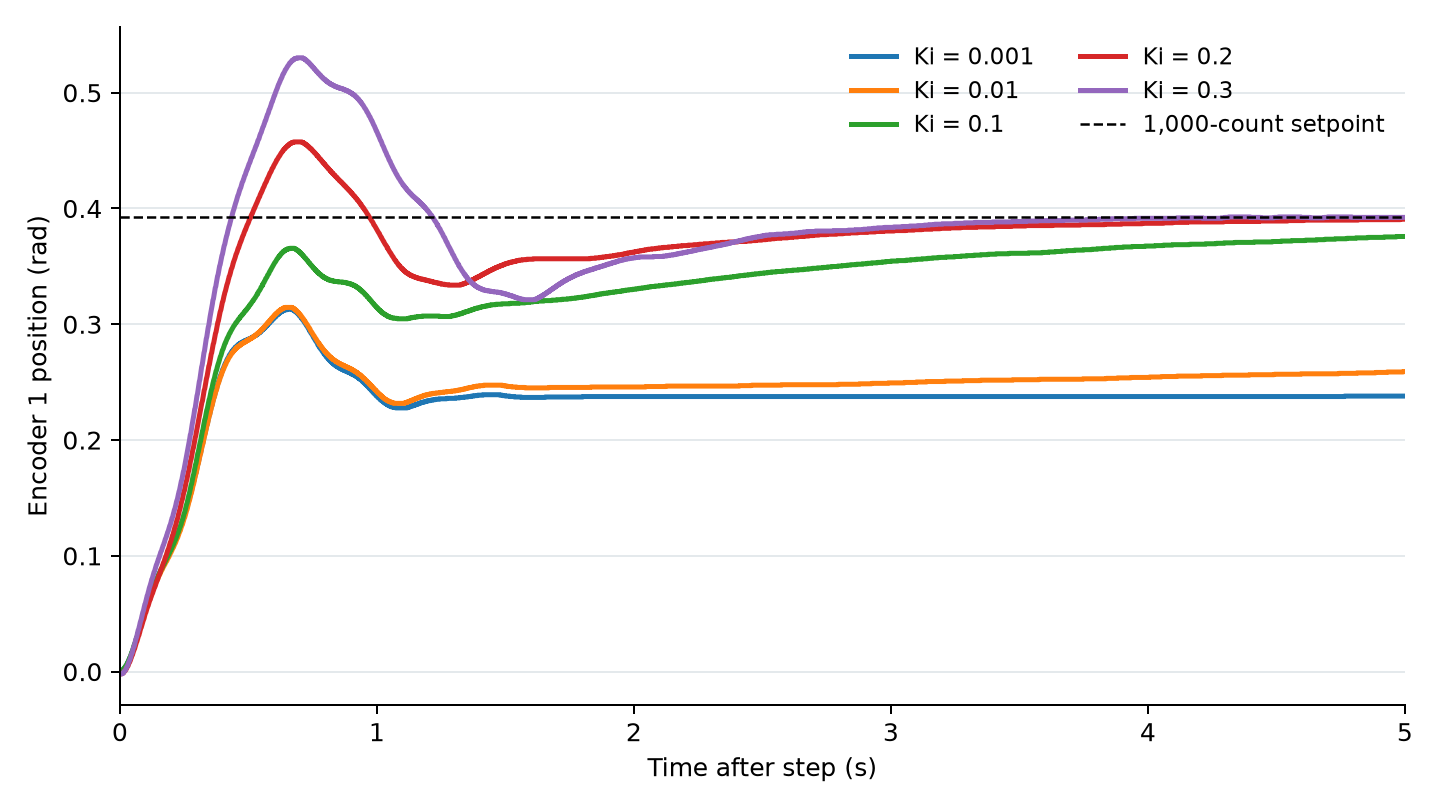
- Processed five PID files containing two positive steps each at about 1 kHz. Kp remained 0.204 and Kd remained 0.014 while Ki increased from 0.001 to 0.3.
- Kept a separate 240-run simplified simulation and its stability classifier clearly separated from the measured hardware conclusions.
Results
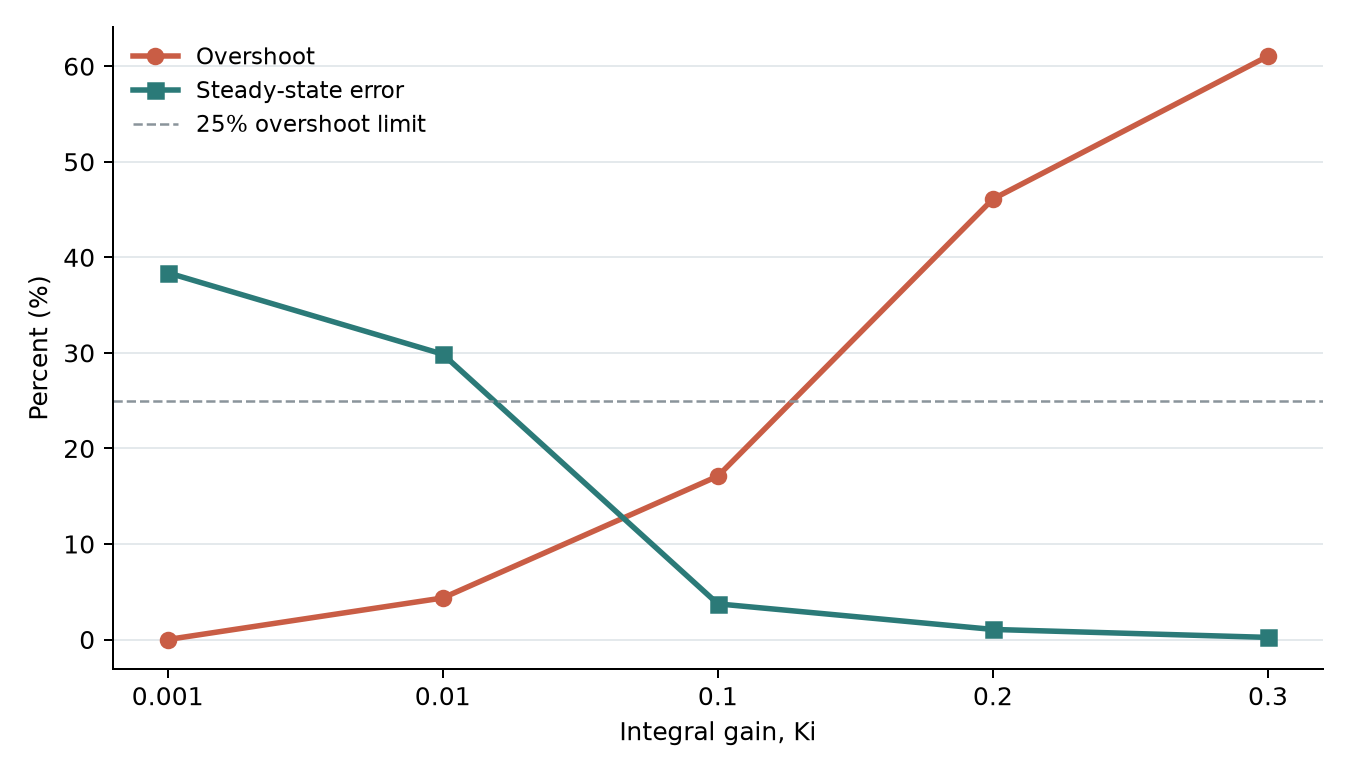
- Across ten measured steps, raising Ki from 0.001 to 0.3 reduced mean steady-state error from 38.4% to 0.22%.
- The same gain change increased mean overshoot from 0% to 61.1%, making the controller tradeoff visible in the measured data.
- Published the source code, derived results, plots, tests, and engineering brief in a standalone public repository.
Tools & methods
- Python
- MATLAB
- NumPy
- pandas
- Matplotlib
- PID control
- Data analysis
Next project
Cantilever FEA Validation